
The Queen’s Gambit took a lot of people by surprise when it came out on Netflix, and it is easy to see why. I would give it five stars without hesitation. It pulls you in from the start and keeps you invested the entire time. Even if you know nothing about chess, the series makes every match feel intense, strategic, and worth watching.
At its core, the story follows a fictional orphan who turns out to be a chess prodigy. What makes it stand out is how it transforms a quiet, thoughtful game into something cinematic and emotional. Because of that, it connects with a much wider audience than you might expect.
A Personal Connection to the Story
I learned chess as a young man in Cuba, so this series felt especially familiar. Growing up, I often heard stories about a Cuban chess prodigy who became one of the greatest players in history. That connection made the show even more meaningful to watch. In fact, the series includes subtle references that honor his legacy, which adds another layer for those who recognize it.
The Legacy of José Raúl Capablanca
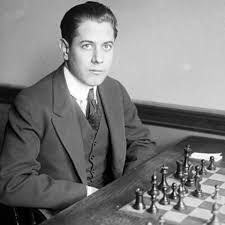
That prodigy was José Raúl Capablanca. He was born in Cuba in 1888 and passed away in 1944. He learned the game by watching his father, who was a Spanish soldier, and quickly showed a natural talent that set him apart.
One story that stands out comes from a 1901 exhibition match. At just 13 years old, Capablanca defeated Cuba’s national champion, Juan Corso. According to Irving Chernev, he made his moves with incredible speed, often taking less than a minute per turn. From that moment on, it was clear he was not just talented, he was exceptional.
Later on, Capablanca became the third World Chess Champion, holding the title from 1921 to 1927. During that time, he shaped how the game was played and understood at the highest level. Even his peers recognized his brilliance.
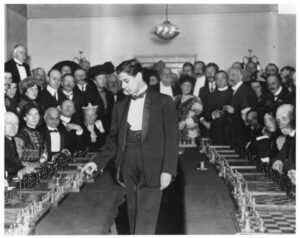
Emanuel Lasker once said, “I have known many chess players, but only one chess genius: Capablanca.”
The “Human Chess Machine”
Capablanca earned the nickname “Human Chess Machine” for a reason. He played with a level of clarity and precision that made the game look simple. At the same time, his endgame skill, speed, and accuracy set him apart from nearly everyone else.
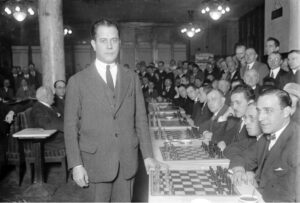
He also became known for his simultaneous exhibition matches, where he played multiple opponents at once. These fast-paced events suited him perfectly. For example, between December 1908 and February 1909, he toured the United States and delivered an incredible performance. He won 168 games in a row before losing a single match in Minneapolis. By the end of the tour, he had played 734 games and won 96.7 percent of them.
A Lasting Impression
Because of all this, watching The Queen’s Gambit feels like more than just entertainment. It reflects a real history filled with remarkable figures like José Raúl Capablanca. It also reminds us how powerful the game of chess can be, both as a mental challenge and as a story worth telling.
If you have not seen it yet, it is worth your time. And if you already have, it might be worth watching again with Capablanca’s legacy in mind.
If you are interested in Chess or want to learn more about Jose Raul Capablanca I recommend you visiting these links:
https://www.chessgames.com/player/jose_raul_capablanca.htmlhttps://www.chessgames.com/perl/chessgame?gid=1262431https://en.wikipedia.org/wiki/Jos%C3%A9_Ra%C3%BAl_Capablancahttps://codepen.io/raineyjt/full/Bzjmjyhttp://www.chessarch.com/archive/0017_capablanca/capablanca.shtml
