
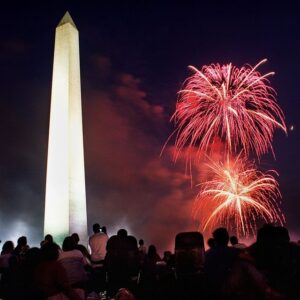
July 4th is Independence Day. Dating back to July 4th, 1776, the United States of America proclaimed its independence from England by signing the Declaration of Independence. Even though the signing of the Declaration itself was not finished until August, the holiday is seen as the official anniversary of U.S. independence. It was not until 1941 that Congress declared Independence Day to be a paid federal holiday. Today, it is celebrated with barbeques and red, white, and blue fireworks all over the country.
Cuban Independence Day May 20th A Complex History
Cuban Independence Day falls on May 20th. At first glance, it should feel like a proud and defining moment in Cuba’s history. However, to really understand why it carries mixed emotions, it’s important to look at what led up to that day.
The Road to Independence
On May 20th, 1902, Cuba officially became independent from Spain. However, Cubans had already been fighting for their freedom long before that moment. For years, they resisted Spanish rule and pushed for independence through sacrifice and persistence.
Then, in 1898, the Spanish American War changed everything. The United States entered the conflict, and its involvement forced Spain to give up control of several territories, including Cuba, Puerto Rico, Guam, and the Philippines.
Because of this, Cuba’s independence came with outside influence. While the war ended Spanish rule, it also placed Cuba under the control of the United States for a period of time.
Independence with Conditions
Although the United States promised to grant Cuba independence, it did not come without limits. The Teller Amendment stated that the U.S. would not permanently control Cuba and would withdraw after the war. However, this promise came with complications.
Soon after, the Platt Amendment introduced strict conditions that Cuba had to accept before U.S. troops would leave. These conditions allowed the United States to intervene in Cuban affairs and influence its government.
As a result, Cuba gained independence in name, but not complete control. The United States maintained significant power over the island’s political and economic decisions.
American Influence in Cuba
During this period, American businesses expanded across Cuba. U.S. corporations controlled many key industries, shaping the country’s economy. At the same time, American culture and investment brought changes that did not always benefit the Cuban people.
For example, industries tied to tourism and entertainment introduced gambling and other activities that reflected outside interests more than local needs. Because of this, many Cubans viewed this era as one of limited sovereignty rather than true independence.
A Day of Reflection
May 20th, 1902 should have marked a fully free Cuba. Instead, it represents a more complicated chapter in the island’s history. While it ended Spanish colonial rule, it also began a new period of foreign influence.
Today, Cuban Independence Day stands as a reminder of both progress and unfinished struggles. It reflects the resilience of the Cuban people and their continued desire for true independence and self determination.
:max_bytes(150000):strip_icc()/GettyImages-5293084171-8b531c798d974bdb8266806cc05a9ecf.jpg)
The following two decades brought a constant struggle between the ruling and the very wealthy class and the peasant working class. These struggles led to the July 26th movement and the new regime. That revolution has kept all but the original revolutionaries of Cuba from being accessible to this day. So, May 20th is not celebrated in Cuba because the Cuban on the street has not ever known freedom.
